
Insights

Practical thinking for stronger businesses.

Notes from the work of operating, transforming and growing companies.

Perspectives from Integrated
Operators walking through a working production facility

Transformation starts with the work, not the roadmap.

A transformation becomes real only when it changes how decisions are made and how work moves through the business.

The starting point is a clear view of the operating reality. Where does work slow down? Which decisions depend on incomplete information? What keeps capable people occupied with avoidable manual tasks? These questions reveal the few changes that can materially improve performance.

Technology, process design and governance should then support that work as one connected system. A focused sequence creates visible progress, gives teams confidence and leaves the business with stronger capability after the programme is complete.

Operations leaders using live performance data in a logistics hub

Practical AI belongs inside the operating model.

The best AI opportunities begin with a business problem, a responsible owner and a result that can be measured.

Useful applications are often grounded rather than spectacular: reducing repetitive work, improving a forecast, helping teams find information or giving leaders a clearer view of performance. Each one should fit the systems and controls already used to run the business.

This is why AI integration is an operating discipline, not a technology experiment. Data quality, workflow design, accountability and adoption matter as much as the model. When those elements move together, AI becomes part of how the business performs every day.

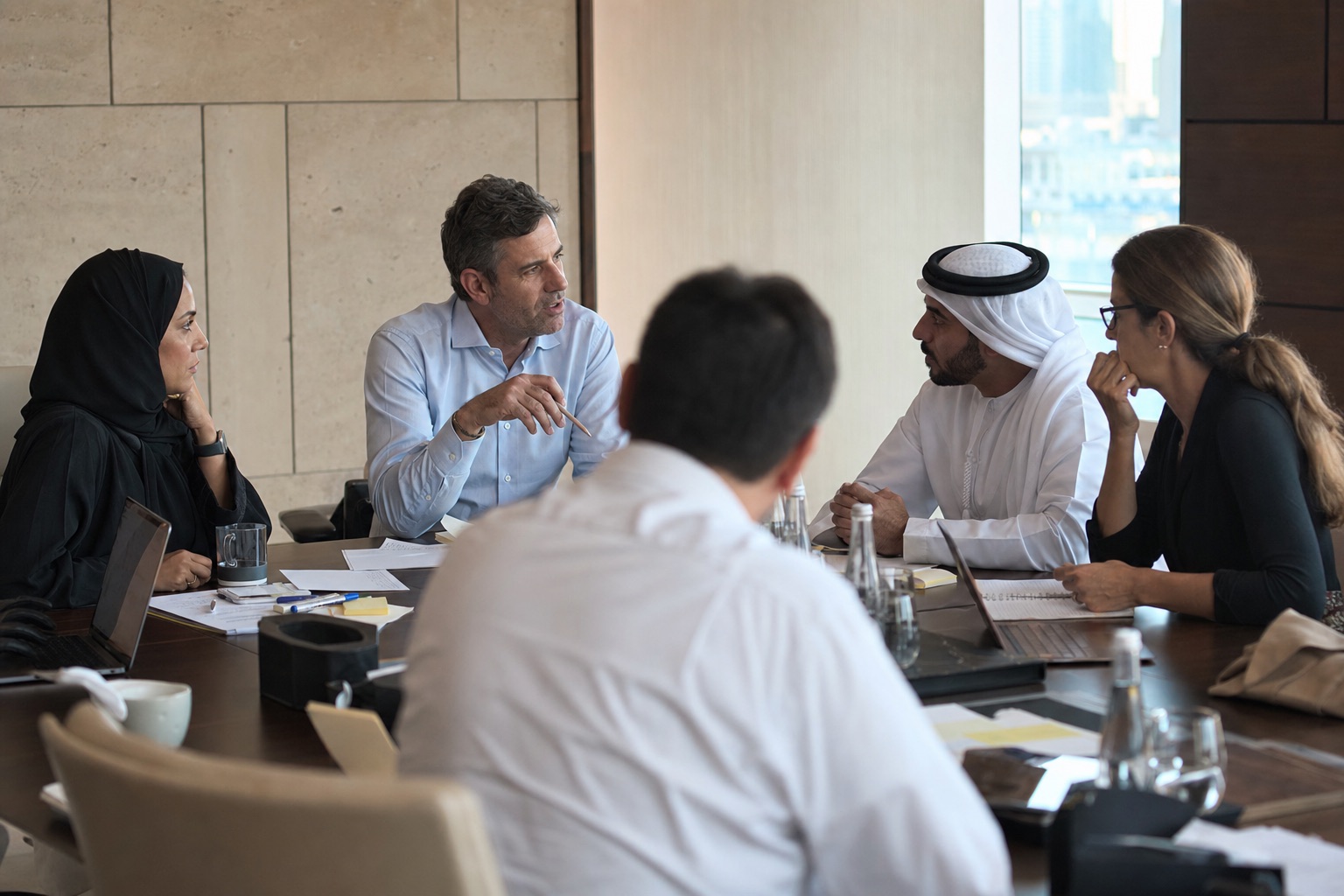
Leadership team working through a growth plan together

Growth needs stronger systems before it needs more complexity.

A growing company should preserve its energy and judgement while making performance easier to see and repeat.

The next phase usually asks more of finance, leadership, technology and governance at the same time. Adding isolated tools or advisers can create activity without creating alignment. The better answer is a shared operating rhythm with clear priorities, reliable information and ownership close to the work.

Strong systems do not make an entrepreneurial business slower. They remove uncertainty, shorten decision cycles and give leaders more room to focus on customers and growth. Structure is valuable when it helps the business move with greater confidence.